

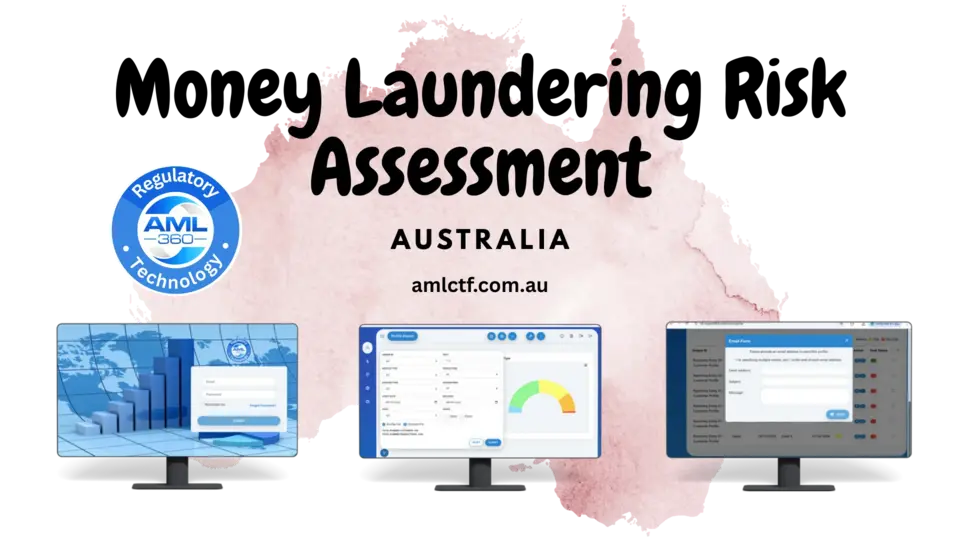
Money LaunderingRisk Assessment Softwarefor Australian Business Entities
Money Laundering Risk Assessment Software: AML360™ RegTech is a practical way to operationalise an AUSTRAC-aligned, adequate risk-based approach for better decisions. AML360™applies risk-based reporting principles to align with AUSTRAC risk-based expectations and common industry good practice.
Money Laundering Risk Assessment: The Risk-Based Engine Behind Confident AML/CTF Decisions
A money laundering risk assessment isn’t paperwork you do for compliance—it’s the decision system you build because of compliance. Done properly, it becomes the single most useful lens for answering: What are we exposed to, why, and what are we doing about it—proportionately and defensibly?
AUSTRAC’s expectations of an adequate risk-based approach are clear in spirit: understand your ML/TF risks, tailor controls to those risks, and be able to demonstrate the reasoning behind key decisions. That’s where risk-based reporting and modern RegTech like AML360™ become valuable: they help you convert assessment thinking into evidence-backed action.
The benefits of AML/CTF RegTech include:
-
Methodology
A clear methodology for identifying and rating ML/TF risks must be logical and demonstrated.
-
Controls
AML/CTF risk assessments must adequately inform the AML/CTF Program and align policies, procedures and controls to mitigate the risks.
-
Reporting
Traceable decisions (who approved what, when, and why). Your firm must demonstrate governance systems for ongoing monitoring and reporting.
What “Adequate” Looks Like in a Money Laundering Risk Assessment (AUSTRAC-Aligned Thinking)
An adequate money laundering risk assessment typically has three qualities: it’s structured, defensible, and usable.
1) Structured: risks are identified consistently
A practical structure usually covers the core risk domains:
→ Customer risk (types, behaviours, beneficial ownership complexity)
→ Product/service risk (speed, anonymity, cash intensity, third-party payment features)
→ Channel risk (online, non-face-to-face onboarding, intermediaries)
→ Geographic risk (customer location, source/destination of funds, sanctions exposure)
→Transactional behavioural risk (patterns, velocity, structuring indicators)
The point isn’t to “tick every box”—it’s to ensure you don’t miss predictable exposure.
2) Defensible: you can explain “why” you rated risk the way you did
AUSTRAC-style adequacy generally means you can evidence:
→ Methodology (how risk is scored/weighted)
→ Data inputs (what you used and why it’s reliable)
→ Control effectiveness (how controls reduce inherent risk)
→ Residual risk outcomes (the risk that remains after controls)
→ Governance (who approved it, when, and under what authority)
3) Usable: it drives real AML/CTF decisions
A good assessment changes behaviour. It informs:
→ Enhanced due diligence (EDD) thresholds
→ Monitoring intensity and typologies
→ Staff training focus
→ Assurance/testing plans
→ Reporting priorities and escalation triggers
→ Resource allocation (the part everyone cares about but rarely documents well)
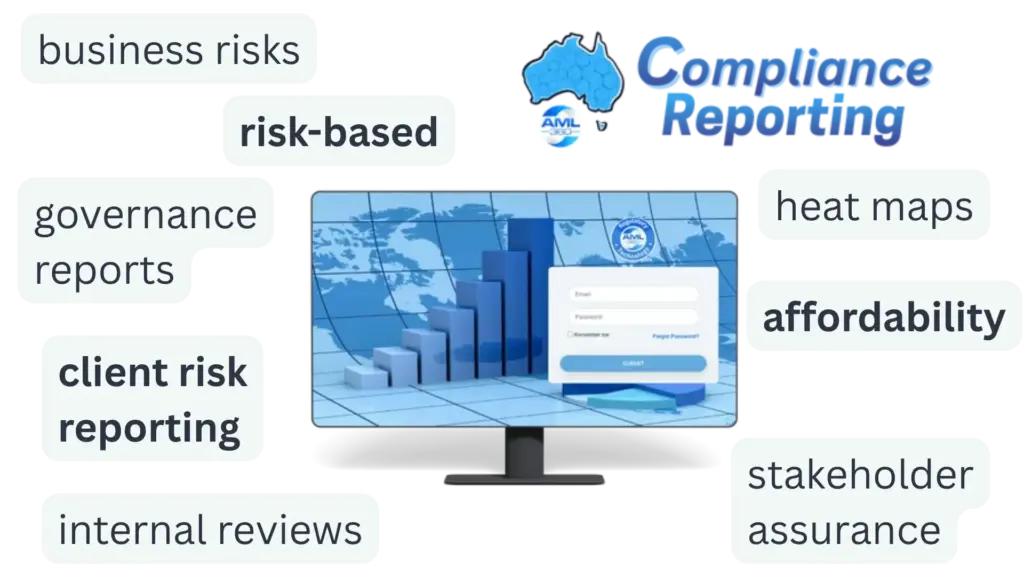
AML360™ RegTech: Operationalising an AUSTRAC-Ready Risk-Based Approach
Most organisations don’t fail AML/CTF because they “don’t care.” They fail because risk assessment and evidence are scattered across spreadsheets, inboxes, policy docs, and people’s memories.
AML360™ is positioned as the fix for that operational gap—helping teams run a repeatable, reviewable, and reportable money laundering risk assessment program.
How AML360™ supports informed decision making (practically)
Centralised risk register + assessment workflow
Keep inherent risk, control ratings, residual risk, owners, and review dates in one governed system.
→ Configurable methodology (weights, scoring, risk appetite)
Align your assessment logic to your business model and AUSTRAC-style proportionality—without rebuilding spreadsheets every quarter.
→ Evidence and audit trail by design
Attach supporting documents, approvals, and change history so you can show how and why ratings changed over time.
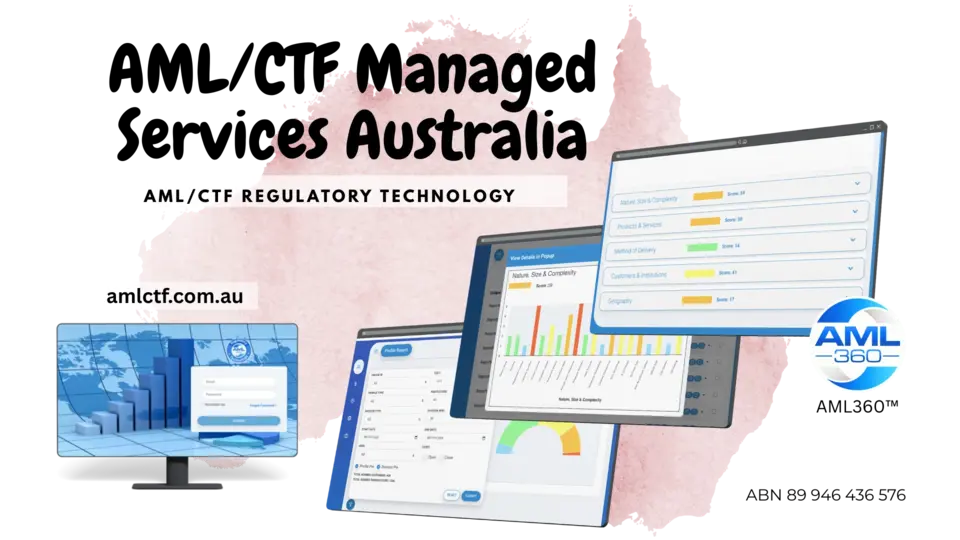
→ Risk-based reporting dashboards
Translate assessment outputs into management reporting that highlights top drivers, changes, exceptions, and actions.
→ Reviews, triggers, and continuous improvement
Manage periodic reviews and “material change” reassessments (new product, new channel, new geography, new typology, new control issue).
IMPORTANT NOTE: AML360™ should be treated as an enabler of compliance—not a substitute for accountable governance, qualified judgement, and fit-for-purpose controls.
Money Laundering Risk Assessment: Risk-Based Reporting
A money laundering risk assessment and risk-based reporting is the discipline of reporting what matters most, in proportion to risk—so leadership can make informed choices and you can demonstrate your rationale during reviews.
What risk-based money laundering risk assessments should do
(a) Connect the dots: risks → controls → outcomes → improvements
(b) Prioritise signal over noise: highlight the top risk drivers and emerging trends
(c) Show decisions and impacts: “We increased monitoring here; alerts rose by X; conversion to cases/SARs/SMRs changed by Y.”
(d) Create an audit-ready narrative: not just charts—reasoning
A simple money laundering risk assessment reporting hierarchy that works
→ Board/Executive view: top residual risks, control performance, material changes
→ MLRO/Compliance view: drivers, typologies, exposure shifts, investigations quality
→ Operational view: queues, SLAs, false positives, uplift opportunities
When your money laundering risk assessment feeds this reporting loop, compliance becomes measurable—not mythical.
What to aim for in preparing a money laundering risk assessment
A strong money laundering risk assessment is not a one-off project—it’s an operating rhythm.
→ Build a methodology that is proportionate, repeatable, and explainable
→ Use risk-based reporting to show decisions, outcomes, and improvement—not just activity
→ Consider AML360™ RegTech to systemise governance, evidence, reviews, and AUSTRAC-ready reporting