
AMLCTF Program Outsourcing:Outsource the Heavy Lifting
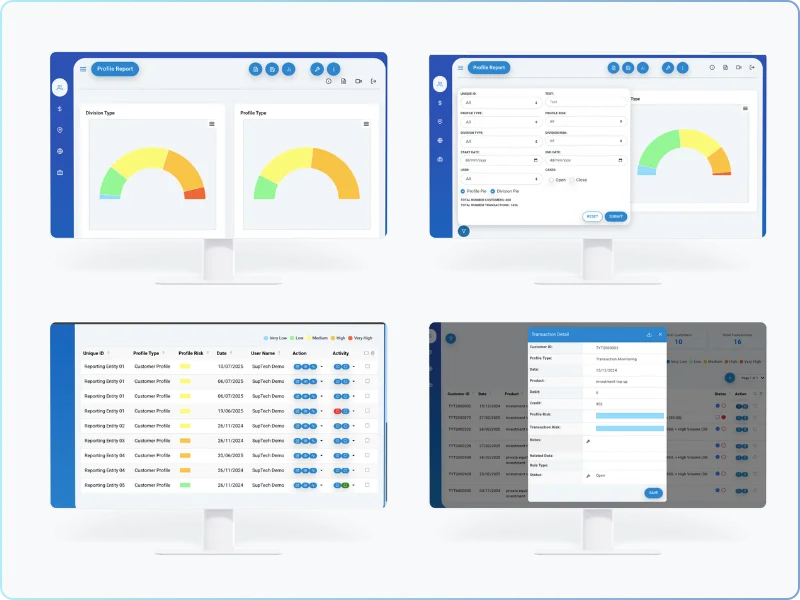
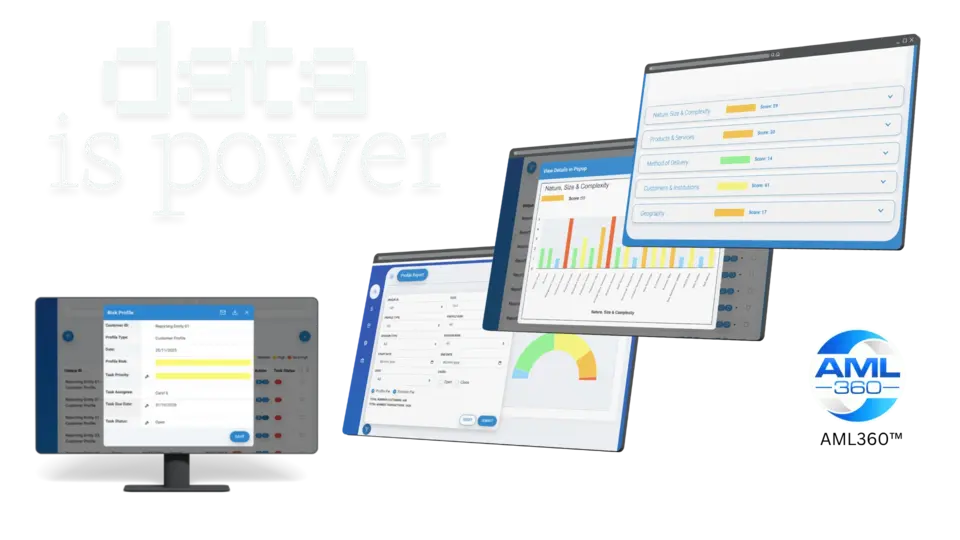
Compliance failure is rarely dramatic at first. More often it starts as a slow drift and governance becomes a quarterly scramble rather than a steady cadence. AML360™ AML/CTF Program Outsourcing fixes this drift as it’s designed as a hybrid model of human AML/CTF experts and regulatory technology.
An AUSTRAC-Ready AML/CTF Operating Model
A modern AML/CTF Program doesn’t fall over because people stop caring—it falls over because the operating model can’t keep up. Risk evolves, products change, staff rotate, data sources get upgraded, and regulatory expectations sharpen. For Australian reporting entities, AUSTRAC’s message is consistent: an AML/CTF Program must be risk-based, implemented in practice, and kept current.
Hybrid RegTech + Expert Oversight
Done well, AML/CTF Program Outsourcing delivers ongoing reviews that keep internal policies, procedures, and controls aligned to AUSTRAC expectations. That’s why AML/CTF Program Outsourcing is increasingly shifting away from “all-or-nothing” arrangements and toward a hybrid management model that combines AML/CTF Regulatory Technology (RegTech) with professional AML/CTF compliance expertise.
Manage Human Resourcing Better
AML/CTF Program Outsourcing reduces over-reliance on scarce internal specialists for repetitive workloads. AML360™ provides AML/CTF operational tuning, and prevents “set-and-forget” programs. In other words, AML360™ services for AML/CTF Program Outsourcing becomes an operating model—one that’s built for constant motion.
Why Traditional AML/CTF Operating Models Struggle (Even With Good Intentions)
Many organisations discover—sometimes painfully—that AML/CTF becomes a staffing problem long before it becomes a technology problem. Skilled AML/CTF professionals are hard to hire and harder to retain, and even strong teams get stretched across alert triage, case investigations, onboarding friction, internal reporting, audit responses, training, policy refreshes, and vendor management. When capacity is pressured, quality tends to degrade in predictable ways, and the program starts to depend on heroic effort instead of repeatable controls. AML/CTF Program Outsourcing, when structured correctly, relieves this pressure without stripping away oversight or accountability.
A transaction monitoring tool or KYC workflow platform does not automatically create effective controls; effectiveness comes from scenario design, segmentation, threshold calibration, escalation logic, evidence capture, access controls, change governance, and ongoing performance tuning. Auditors and AUSTRAC test the AML/CTF Program strengths.
Hybrid AML/CTF Program Outsourcing reduces this “drift risk” by pairing RegTech capability with continuous configuration oversight and documented change control.
By eliminating the traditional AML/CTF Program models that rely heavly on labour-intensives process and administrative budens, the AML360™ AML/CFT Program Outsourcing model automates for faster, more reliable and demonstrable compliance reporting – whilst reducing AML/CTF compliance costs of the traditional AML/CTF Program model.
Businesses that are focused on growth will introduce new products, expand into new channels, onboard new customer types, or change core systems. The AML360™ outsource model adapts to the regulatory movement and business changes.
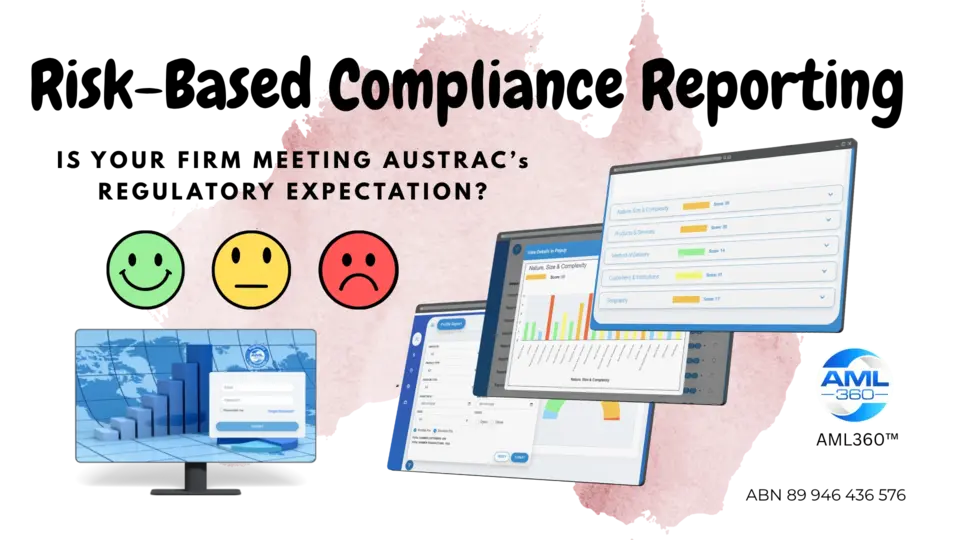
Quarterly reporting is embedded into all outsourcing services, which ensures true focus and oversight of the AML/CTF Program. Quarterly reporting strengthens governance systems and has a greater capability of identifying any gaps that may evolve into a regulatory breach.
Hybrid AML/CTF Program Outsourcing (RegTech + Human Expertise)
Hybrid AML/CTF Program Outsourcing works because it assigns responsibilities to the right “engine.” RegTech takes on the high-volume, repeatable, data-heavy work that benefits from consistency and speed. It ingests and normalises data, applies rules reliably, automates workflows and escalations, and produces dashboards and traceable reporting outputs that stand up to scrutiny. It also ensures that critical controls don’t depend on someone remembering to run a report or check a queue—automation makes good habits non-optional.
Human AML/CTF experts provide the layer you cannot automate: judgement. In a hybrid AML/CTF Program Outsourcing model, these professionals interpret risk in the context of your business strategy and customer base, decide what “good detection” looks like for your risk appetite, design and refine scenarios, and ensure system configurations remain aligned with internal policy intent. They also provide governance discipline—documenting rationale, maintaining change control, performing quality assurance, and translating AUSTRAC expectations into practical controls that your teams can operate day-to-day.
This is not “tech replaces people” or “people manage tech.” Hybrid AML/CTF Program Outsourcing deliberately pairs technology’s consistency with expert steering, so controls remain both scalable and defensible.
What Gets Outsourced (and What You Still Own) in AML/CTF Program Outsourcing
The most effective AML/CTF Program Outsourcing arrangements are explicit about the difference between accountability and execution. Regulatory accountability stays with the reporting entity; what changes is how you resource the work and how consistently you evidence it. In practice, hybrid AML/CTF Program Outsourcing commonly covers the parts of the program that demand specialised tuning and continuous attention, such as supporting AML/CTF Program documentation like risk assessments, client risk ratings, ongoing monitoring and internal AML/CTF program reviews. AML360™ adapts to thresholds and segmentation, to execute onboarding or KYC workflows (including exceptions and escalations).
Many organisations also use AML/CTF Program Outsourcing for tiered operational support like alert and case triage, complemented by structured quality assurance sampling and outcomes reporting.
At the same time, organisations typically retain key internal decision rights. Under a sensible AML/CTF Program Outsourcing model, the governance workflow includes internal leaders receiving the right level of communications in alignment with AUSTRAC expectations.
AML360™ AML/CTF outsourced experts have an ongoing oversight and reporting system and controls to ensure Australian reporting entities have mechanisms in place to facilitate the execution of AML/CTF compliance.
Benefits of AML/CTF Program Outsourcing (Hybrid Model)
The most visible benefit of AML/CTF Program Outsourcing is cost reduction, but the more important benefit is sustainability. A hybrid model reduces fixed staffing pressure by replacing a large “always-on” internal team with a smaller internal governance footprint supported by RegTech capability and on-demand expert capacity. Rather than paying for peak workload year-round, you pay for platform capability and targeted expertise aligned to volumes, change events, and risk priorities. This is how AML/CTF Program Outsourcing lowers total operating cost without lowering standards: standards are enforced through disciplined configuration, documented decisions, and repeatable controls.
Hybrid AML/CTF Program Outsourcing also creates a form of “always-on” compliance without burning people out. RegTech ensures the routine work happens consistently—alerts flow, escalations trigger, evidence is captured, and reporting is repeatable—while experts oversee the system’s performance and the program’s alignment. The net effect is fewer frantic end-of-quarter scrambles and fewer situations where teams are forced to choose between speed and quality. With AML/CTF Program Outsourcing, compliance becomes a managed process rather than a perpetual emergency.
Smoother Systems – Peace of Mind
Another compounding benefit of AML/CTF Program Outsourcing is improved monitoring quality through faster tuning and reduced false positives. When scenario performance is reviewed regularly, thresholds can be calibrated based on outcomes, segmentation can be refined by customer and product risk, and workflows can be adjusted so analysts spend time on meaningful cases rather than noise. Over time, this improves “signal-to-noise,” which is one of the clearest indicators of a sustainable transaction monitoring environment. Hybrid AML/CTF Program Outsourcing makes this improvement routine instead of occasional.
Governance & Audit Readiness
Governance and audit readiness also strengthen under AML/CTF Program Outsourcing, because evidence is produced as a natural by-product of operations rather than as a panic-driven reconstruction. When oversight is embedded, you consistently capture decision rationales, tuning notes, testing results, QA outcomes, and change logs. That creates defensibility: you can explain not only what your program does, but why it does it that way, how it’s tested, and how it evolves. This is exactly the kind of “show your work” discipline AUSTRAC and auditors expect to see from a mature AML/CTF control environment.
Most importantly, the AML360™ hybrid AML/CTF Program Outsourcing includes ongoing review so internal AML/CTF policies, procedures, and controls keep pace with business change and regulatory expectations. Instead of treating program review as an occasional project, the hybrid model treats it as a recurring operating rhythm. When products launch, channels expand, customer segments shift, typologies evolve, or systems change, the program can be reviewed and updated in a controlled, documented manner. This is where AML/CTF Program Outsourcing becomes smarter cost: small, regular improvements prevent large, expensive remediations.
-
Efficiency Gains
Remove friction with automated workflows and streamlined operations.
-
Cost Reduction
AML/CTF compliance software eliminates labour intensive processes which removes significant costs associated to human resourcing.
-
Reduced Complexity
AML360™ AML/CTF compliance software is configured to automate the analysis and reporting of ML/TF compliance obligations.
How Hybrid AML/CTF Program Outsourcing Works in Practice: A Living Operating Rhythm
A strong AML/CTF Program Outsourcing arrangement usually starts by establishing a baseline view of the current program and its control environment. That includes mapping policies, procedures and controls to align with operational business requirements, based on ML/TF risk and regulatory exposure. This phase is less about producing a “pretty document” and more about finding where drift has already occurred—then correcting it in a controlled way, which lessens regulatory risk and protects brand reputation.
In hybrid AML/CTF Program Outsourcing, transaction monitoring scenarios and onboarding workflows are configured with explicit rationale, aligned to the reporting entity’s risk appetite, and supported by segmentation and threshold logic. Access controls, change management, and documentation practices are embedded for central defensibility. A system that cannot explain its own changes is a system that will eventually create uncomfortable questions.
From there, the AML360™ outsourcing model moves into continuous review. Performance is tracked through consistent management information such as alert volumes, ageing, closure reasons, escalation patterns, and quality assurance findings are tested. These insights feed structured tuning cycles where scenarios are improved and thresholds recalibrated. The AML/CTF Program itself is reviewed periodically (quarterly) —and also triggered by material changes. This ensures policies and procedures remain aligned with what controls are doing in practice. This mature AML/CTF Program Outsourcing model ensures oversight is documented which is exactly why they work.
Finally, reporting and improvement become the habit. AML360™ governance packs translate operational data into leadership-ready insights: what’s changing, what’s emerging, what controls are improving, where the risks are clustering, and what remediation is underway. At that point, AML/CTF Program Outsourcing stops feeling like “help from outside” and starts functioning like a dependable internal operating system—just leaner.
AML/CTF Program Outsourcing: Oversight That’s Real (Not Symbolic)
“Oversight” can mean anything from a monthly meeting to a fully governed control environment. In a high-functioning AML/CTF Program Outsourcing model, oversight is tangible and testable. Named accountable roles exist, decision rights are explicit, and change control is disciplined so that configuration updates are approved, tested, recorded, and explainable. Quality assurance isn’t a tick-the-box exercise; it is a feedback loop that improves both analyst decisioning and system configuration. Evidence discipline is treated as a feature, not an afterthought—because well-documented rationale is often the difference between a program that looks mature and one that looks improvised.
This is also how AML/CTF Program Outsourcing avoids the classic “black box” risk. The reporting entity retains visibility, control points, and sign-off authority, while still benefiting from outsourced specialist execution. This ensures the reporting entity gains leverage without losing clarity.
Where the Biggest Wins Show Up (Hint: It’s Not Only Cost)
The strongest results of AML/CTF Program Outsourcing usually appear in speed of change and consistency of outcomes. When product or process changes occur, the program adapts faster because you have both the tooling and the expertise ready to respond. Alert quality improves because tuning is continuous rather than occasional. Case narratives and decision rationales become more consistent because workflows and quality assurance reporting structures. Audit outcomes tend to improve because documentation is produced as part of normal operations. Management confidence rises because dashboards and reporting are tied to real control performance rather than vanity metrics.
Over time, AML/CTF Program Outsourcing helps compliance stop feeling like a separate world running alongside the business. It becomes a living control system that evolves with the business—quietly, continuously, and with fewer nasty surprises.
In-House vs Fully Outsourced vs Hybrid: A Clear Comparison
| Model | Strengths | Typical risks / limits | Best fit |
|---|---|---|---|
| Fully in-house | High control and strong internal knowledge when the team is mature and adequately resourced. | High fixed cost, talent scarcity, and uneven coverage when key individuals leave or workloads spike. | Larger entities with established AML/CTF functions and budget for sustained capability. |
| Fully outsourced | Lower internal workload and rapid access to external capability if governance is strong. | Risk of weak internal ownership and “black box” execution if decision rights, evidence, and change control are unclear. | Very small or low-complexity operations with disciplined vendor governance. |
| Hybrid (RegTech + experts) | Balanced cost, scalable operations, defensible decisions, and continuous improvement through structured review and tuning. | Requires clear, strong change control, and consistent governance routines to avoid ambiguity. | Most growing entities and mid-market firms seeking sustainable compliance aligned to AUSTRAC expectations. |
This comparison still makes the practical conclusion clear: hybrid AML/CTF Program Outsourcing reduces the two most common failure modes—under-resourcing and under-governing—while staying flexible enough to evolve as your business and risk profile evolve.
What “Good” Looks Like Against AUSTRAC Expectations
AUSTRAC expects AML/CTF Programs to be risk-based, implemented, and kept current. Hybrid AML/CTF Program Outsourcing supports those expectations by ensuring policies and procedures are not just well-written, but clearly connected to operational controls and system behaviour. It also ensures those controls are configured correctly, reviewed regularly, tuned based on outcomes, and governed through documented change management. When your program operates this way, compliance is not a one-time project; it’s a living system with traceable decisions and routine improvement.
The Takeaway: AML/CTF Program Outsourcing That Stays Lean Without Cutting Corners
Outsourcing your AML/CTF Program doesn’t mean handing over the keys and hoping for the best. With a hybrid management model, AML/CTF Program Outsourcing keeps accountability and control with the reporting entity while adding scalable execution. RegTech provides consistency, speed, and traceability. Professional AML/CTF experts provide oversight, configuration governance, and defensible judgement. Together, they produce a lower-cost AML/CTF Program with ongoing reviews that keep internal policy, procedures, and controls aligned with AUSTRAC regulatory expectations—quietly effective, continuously improving, and built to last.