
AMLCTF Australia - Get Regulatory Technology forAML/CTF Programs
AMLCTF Regulatory Technology (RegTech) is becoming a practical advantage for managing AML/CTF compliance under Australia’s Anti‑Money Laundering and Counter‑Terrorism Financing Act 2006 (AML/CTF Act). As Australia’s single AML/CTF regulator (AUSTRAC) continues to sharpen a more risk‑based approach to supervision and enforcement, businesses must sharpen their AML/CTF Program.
Practical cautions: AMLCTF RegTech isn’t a “buy compliance” button
RegTech is powerful, but only when implemented with realistic governance. Common pitfalls include:
⇥ Over-reliance on vendor defaults without tailoring to the entity’s risk profile
⇥ Poor data quality (garbage in, garbage out—still undefeated)
⇥ Model opacity without documentation or explainability
⇥ Weak change management (rules change without approvals, testing, or logging)
⇥ Integration gaps that leave analysts jumping between systems
A risk-based regulator is unlikely to be impressed by sophisticated technology if outcomes are inconsistent or the business cannot explain how decisions are made.
AML/CTF teams and leadership collaborate
AML360™ RegTech’s core advantage under Australia’s AML/CTF Act is that it helps organisations operationalise risk-based compliance—consistently, at scale, and with evidence. As AUSTRAC continues to lean into risk-based supervision, the winners will generally be those who can:
⇥ Show their AML/CTF program is tailored to risk, not generic
⇥ Demonstrate controls are working and improving, not just documented
⇥ Produce timely, high-quality reporting and clear audit trails
⇥ Give senior leadership meaningful oversight through reliable metrics
⇥ Adapt quickly as threats, typologies, and products change
In that world, AML360™ RegTech becomes less about automation for its own sake and more about turning AML/CTF into a disciplined system: measurable controls, defensible decisions, and faster detection—backed by a story the organisation can prove.
Setting the scene: AMLCTF obligations are getting “more risk-shaped”
Australia’s AMLCTF regime has always required reporting entities to do more than tick boxes. The AML/CTF Act and Rules push businesses to identify, mitigate, and manage ML/TF risk, document those controls, and demonstrate that they work in practice. What’s changing is the supervisory emphasis: AUSTRAC’s oversight is increasingly risk-based, meaning regulatory attention (and expectations) concentrate on the quality of outcomes—how effectively a business identifies risk, applies controls, and adapts as threats evolve.
This is where RegTech—technology designed to support regulatory compliance—moves from “nice-to-have” to a genuine operational advantage. Used well, RegTech helps regulated businesses transform AML/CTF from a compliance cost centre into a measurable control system with faster detection, better reporting, and stronger governance.
What RegTech means in an AMLCTF context (and why it matters)
RegTech isn’t one product. It’s a category of tools that support the full AML/CTF lifecycle, including:
⇥ Customer identification and verification (KYC/eKYC) and onboarding controls
⇥ Customer due diligence (CDD) and enhanced due diligence (EDD) workflows
⇥ Sanctions and PEP screening (initial and ongoing)
⇥ Transaction monitoring, alert triage, and case management
⇥ Suspicious matter reporting (SMR) and threshold/international funds transfer reporting support
⇥ AML Risk assessments, control testing, audit trails, and governance reporting (a) Training, attestations, and policy management, (b) Data quality, record keeping, and retention orchestration.
In a risk-based supervisory environment, these tools matter because the regulator typically looks for a clear chain from risk identification → control design → control operation → evidence of effectiveness. RegTech can make that chain visible, defensible, and faster to maintain.
Advantage 1: Stronger risk-based AML/CTF programs through measurable controls
Australia’s AML/CTF framework expects reporting entities to maintain an AML/CTF program that is tailored to their risks. In practice, many organisations struggle with translating abstract risk statements (“higher risk customers,” “complex structures”) into consistent operational decisions.
RegTech improves this by turning AML/CTF into a rules + workflow + evidence system:
⇥ Risk scoring engines apply consistent logic across onboarding and ongoing review.
⇥ Dynamic risk models can incorporate customer type, product/channel risk, geographic exposure, transaction behaviour, and adverse media flags.
⇥ Control mapping links controls (screening, monitoring thresholds, EDD triggers) back to specific risk drivers.
The result is not just better compliance—it is a better ability to show AUSTRAC that the business has designed controls proportionate to its risk profile, and that those controls function in a repeatable way.
Advantage 2: Better customer due diligence (CDD/EDD) without sacrificing speed
CDD and EDD are frequent friction points: compliance wants thoroughness, the business wants conversion, and customers want speed. Modern RegTech solutions can reduce that tension.
How RegTech improves CDD
⇥ Digital identity verification can automate document checks, biometric matching, liveness tests, and authenticity signals.
⇥ Automated data capture reduces manual entry errors and gaps in records.
⇥ Beneficial ownership workflows help identify controllers and owners across entities and trusts, with structured evidence collection.
How RegTech improves EDD
⇥ Trigger-based escalation (e.g., high-risk jurisdiction, unusual source of funds, PEP match) routes cases to specialist review.
⇥ EDD templates ensure AML/CTF Compliance Officers capture consistent evidence: source of wealth, source of funds, corporate structure rationale, and corroborating documentation.
⇥ Decision logging records why a customer was accepted, rejected, or restricted—helpful under risk-based supervision.
In a risk-based supervisory model, AUSTRAC is less interested in whether a form was completed and more interested in whether the entity applied appropriate due diligence given the risk. RegTech makes “appropriate” easier to operationalise at scale.
Advantage 3: Higher quality, more defensible AMLCTF transaction monitoring
Transaction monitoring is one of the most visible AML controls—and one of the easiest to get wrong. Too simple and it misses risk; too sensitive and it floods analysts with false positives. Either way, it becomes hard to demonstrate effectiveness.
RegTech offers several improvements:
⇥ Behavioural analytics identify deviations from a customer’s normal activity, not just one-size-fits-all thresholds.
⇥ Network and link analysis can surface mule networks or structuring patterns across seemingly unrelated accounts.
⇥ Scenario libraries can be tailored to product/channel typologies relevant to Australian risks.
⇥ Continuous tuning supports governance-driven model refinement (with documented reasons for changes).
Risk-based supervision tends to reward the ability to show that monitoring is risk-aligned and continually improved. A modern monitoring platform makes it easier to demonstrate how scenarios were selected, calibrated, tested, and reviewed.
Advantage 4: More consistent and timely suspicious matter reporting (SMRs)
Suspicious matter reports are high-stakes: they reflect not only detection capability but also investigative discipline and decision-making. RegTech helps by:
⇥ Providing case management that ties together alerts, customer profiles, screening hits, documents, and investigative notes.
⇥ Enforcing standardised investigation steps and quality checks before submission.
⇥ Supporting triage prioritisation so the riskiest matters are escalated faster.
⇥ Maintaining audit trails of who decided what, when, and why.
This consistency matters in a risk-based environment where the regulator may look for patterns: Are decisions consistent across teams? Are timeframes respected? Is suspicion clearly articulated and supported by evidence?
-
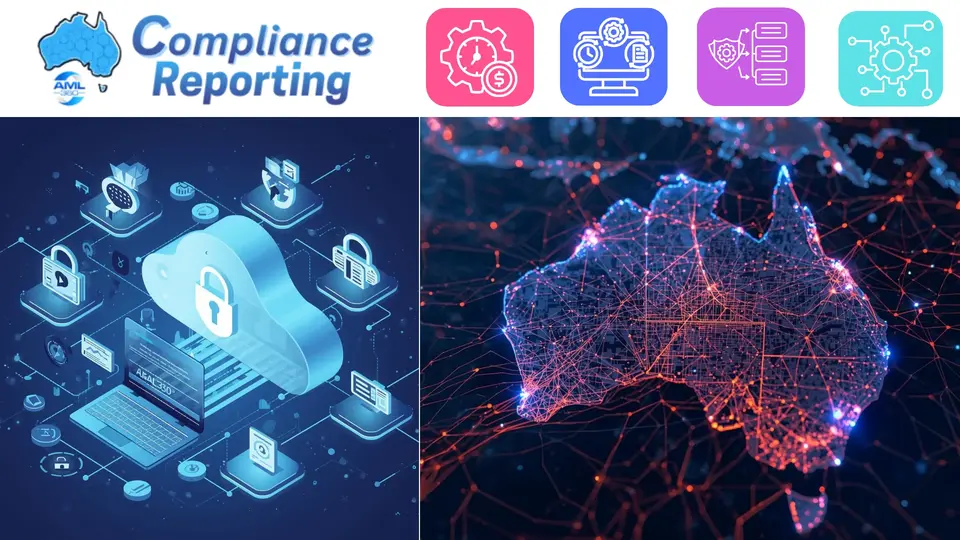
Efficiency Gains
Remove friction with automated workflows and streamlined operations.
-
Cost Reduction
AML/CTF compliance software eliminates labour intensive processes which removes significant costs associated to human resourcing.
-
Reduced Complexity
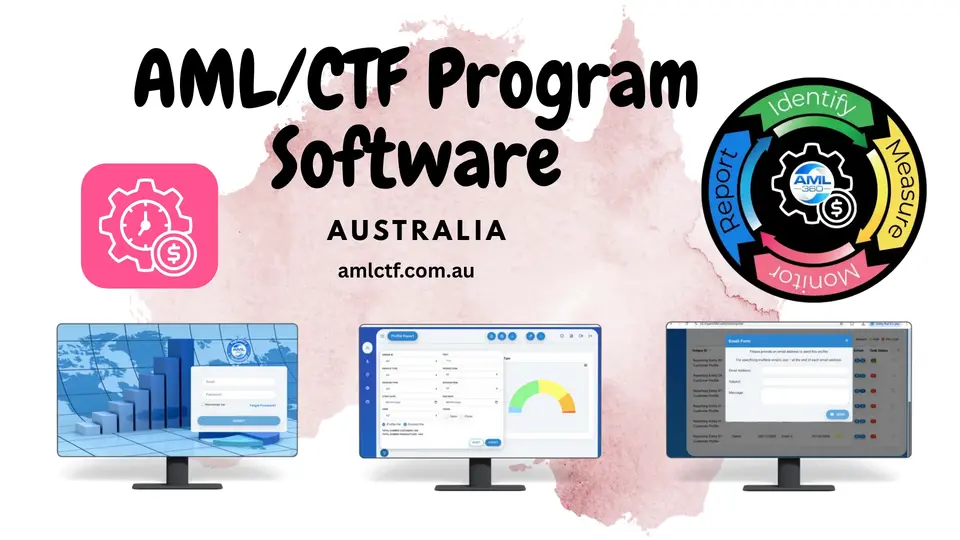
AML360™ AML/CTF compliance software is configured to automate the analysis and reporting of ML/TF compliance obligations.
Advantage 5: Reduced human error and stronger record keeping
The AML/CTF Act framework requires reporting entities to keep certain records and to be able to produce evidence of compliance. Manual processes often fail quietly: incomplete files, missing IDs, inconsistent notes, or lack of proof that checks occurred.
RegTech strengthens the compliance “paper trail” (often digital) by:
⇥ Automating record retention based on defined retention schedules.
⇥ Capturing system logs for verification checks, screening results, and monitoring decisions.
⇥ Providing version control for policies, procedures, and risk assessments.
⇥ Enabling structured data rather than free-text-only records, improving retrieval and audit readiness.
For a risk-based supervisor, strong record keeping isn’t just administrative—it is proof that controls are operating. RegTech makes “prove it” less painful.
Advantage 6: AMLCTF governance, oversight, and accountability
Boards and senior management are increasingly expected to understand AMLCTF risk exposure and control effectiveness. RegTech can elevate governance by producing clear management information:
⇥ Dashboards for key risk indicators (KRIs) and key control indicators (KCIs)
⇥ Trending on alert volumes, conversion rates, investigation timeliness, and outcomes
⇥ Tracking EDD backlogs and high-risk customer cohorts
⇥ Monitoring screening performance and model drift
This supports a more mature approach: AMLCTF becomes a managed risk function, not a compliance afterthought. In a risk-based supervisory setting, that maturity can materially reduce regulatory friction.
Advantage 7: Faster adaptation to change—new typologies, new products, new risks
Money laundering and terrorism financing risks evolve quickly. So do business models: instant payments, digital wallets, crypto-related exposure, embedded finance, and cross-border services.
RegTech platforms are generally better at adapting because they offer:
⇥ Configurable rules and workflows without rebuilding entire processes
⇥ Faster deployment of new monitoring scenarios and investigation templates
⇥ Easier integration of new data sources (device intelligence, behavioural signals, consortium data, adverse media feeds)
In practice, this helps organisations respond to AUSTRAC’s risk-based expectations: not merely having controls, but keeping them current as risks and products change.
Advantage 8: More efficient use of AML/CTF compliance resources (and less burnout)
AMLCTF teams are often stretched between onboarding queues, screening hits, monitoring alerts, investigations, reporting, audits, and training. RegTech can reduce workload through:
⇥ Alert deduplication and intelligent grouping
⇥ Automated dispositioning for low-risk false positives (with governance)
⇥ Workflow routing that assigns complex cases to senior analysts
⇥ Pre-populated report fields and templated narratives
Efficiency is not just about cost. It is about ensuring skilled human judgment is used where it matters most—high-risk customers, ambiguous patterns, and genuinely suspicious behaviour.
Advantage 9: Better integration across “silos” (KYC, screening, monitoring, fraud)
Many businesses still run AML controls in separate systems: onboarding tools, screening vendors, core banking systems, and spreadsheets. That fragmentation makes it hard to see the full story of a customer.
RegTech—particularly when integrated well—creates a more unified view:
⇥ KYC data informs monitoring thresholds
⇥ Screening hits trigger EDD or account restrictions
⇥ Fraud signals can enrich AML investigations (and vice versa)
⇥ Investigations feed back into risk scoring and control tuning
A risk-based regulator tends to value this joined-up approach because it reduces blind spots and makes outcomes more consistent.
Risk-based AMLCTF supervision: why RegTech aligns with AUSTRAC’s direction
Risk-based supervisory oversight generally leads to a few practical realities for reporting entities:
Higher expectations for demonstrable effectiveness
“We have a policy” is weaker than “we can show controls are working, tested, and improved.”Greater focus on higher-risk areas
AUSTRAC’s attention tends to concentrate on sectors, products, channels, and entities where harm is more likely or impact is larger.More emphasis on governance and accountability
Who owns AML risk? How does the board know the program works? What happens when metrics deteriorate?
RegTech supports all three by providing measurement, traceability, and repeatability—the hallmarks of an effective risk control system.