
AML Software DemoAnti-Money Laundering Governance and Compliance
Risk-based governance and reporting in anti-money laundering (AML) compliance is essential for financial institutions and regulatory bodies. The complex nature of financial transactions and the constant evolution of money laundering schemes necessitate a robust risk management framework.

-
Efficiency Gains
Remove friction with automated workflows and streamlined operations.
-
Cost Reduction
AML/CTF compliance software eliminates labour intensive processes which removes significant costs associated to human resourcing.
-
Reduced Complexity
AML360™ AML/CTF compliance software is configured to automate the analysis and reporting of ML/TF compliance obligations.
The Importance of a Risk-Based Approach
A risk-based approach (RBA) involves evaluating the specific risks associated with different products, services, customers, and geographic locations. This methodology ensures that resources are allocated efficiently, focusing on areas that pose the highest risks of money laundering. The Financial Action Task Force (FATF) advocates for RBA as a backbone for effective AML compliance, which enables organizations to tailor their processes to the unique risks they face .
Benefits of a Risk-Based Approach
Resource Allocation: By identifying high-risk areas, financial institutions can allocate their resources and compliance efforts more effectively, thus maximizing their ability to detect and prevent money laundering.
Proportional Response: A risk-based strategy allows organisations to implement proportional measures based on the risk profile of their clients, rather than applying uniform standards that may be unnecessary for lower-risk individuals.
Enhanced Detection: Organisations employing RBA can enhance their transactional monitoring systems, ensuring that suspicious activities are flagged and investigated in a timely manner.
Regulatory Compliance: Utilising RBA helps organisations comply with ever-evolving regulatory requirements, reducing their risk of sanctions and penalties .
Components of Risk-Based Governance
To ensure effective risk-based governance, organisations must integrate several components into their compliance framework:
Risk Assessment and Profiling
Conducting a thorough risk assessment is the cornerstone of an effective risk-based governance framework. This involves identifying and analysing potential risks based on:
⇢ Customer characteristics (e.g., high-net-worth individuals vs. regular consumers)
⇢ Geographic risk (e.g., operating in jurisdictions identified as high-risk for money laundering)
⇢ Product risk (e.g., cash-intensive businesses prone to money laundering) .
Continuous Monitoring
Ongoing monitoring of transactions and customer behaviour is crucial to identify changes in risk profiles. This requires implementing advanced technological solutions that allow for real-time analysis of transactional data.
Reporting Mechanisms
Robust reporting mechanisms play a vital role in ensuring transparency and compliance within anti-money laundering governance. Organizations must establish processes for reporting suspicious activities to authorities, adhering to the legal obligations set forth by AML legislation .
The Role of AML360™ in Risk-Based Governance
AML360™ is a pioneering regulatory technology platform designed to support financial institutions in their risk-based governance and reporting efforts.
Features of AML360™
Automated Risk Assessment: AML360™ streamlines the process of risk assessment by automating data collection and risk evaluation, allowing institutions to maintain currency in their risk profiles .
Ongoing Monitoring: The platform provides real-time monitoring capabilities, enabling organisations to stay ahead of suspicious activity and ensuring compliance with regulatory requirements.
Comprehensive Reporting: AML360™ offers automated reporting features, allowing organisations to efficiently generate detailed reports for regulatory submission and internal audits. This enhances transparency and accountability .
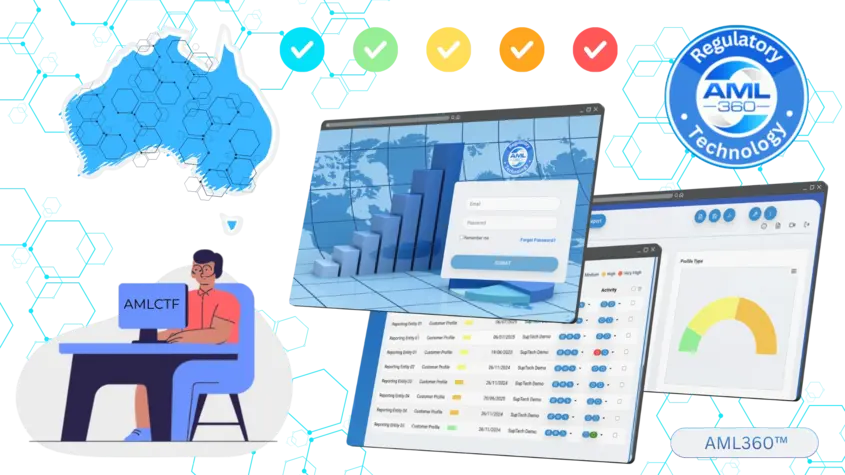
User-Friendly Interface: The intuitive design of AML360™ allows users to easily navigate the system, facilitating quicker decision-making and more efficient compliance practices .