
AML Risk Assessment Australia:AML/CTF Programs
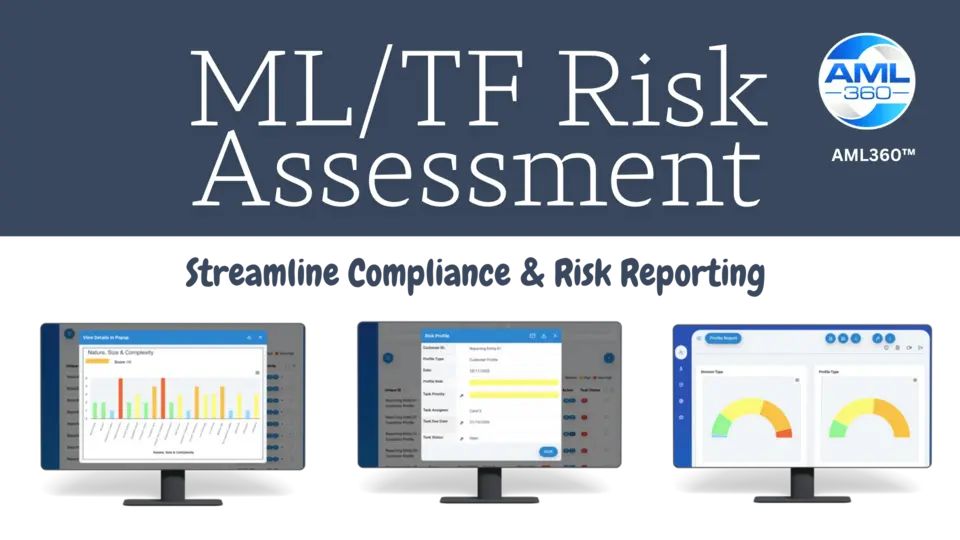
AML360™ Regulatory Technology (AML360™ RegTech) is reshaping compliance the same way cloud accounting reshaped finance. By replacing labour-heavy, manual routines with structured workflows, automation, and audit-ready reports, AML360™ is driving your AML Risk Assessment Australia reporting framework with low cost yet delivering compliance efficiency. AML360™ removes high costs from eliminating repeated human effort of collecting information, checking it, scoring risk consistently, recording decisions, and producing proof when regulators (or stakeholders) ask for it.
AML360™ RegTech can drive the transition to a risk-based AML/CTF Program, driven by AML360™ AML Risk Assessment Australia reporting solutions.
AML360™ ensures lower-cost, higher-efficiency compliance frameworks—grounded in public regulatory guidance and industry solution sources.
If your current AML/CTF operations are costly, this will be for one simple reason: they’re made of many small, repeatable tasks performed manually across many matters. AML360™ transitions your business to digital compliance. Think of AML360™ as your Digital AML/CTF Compliance Officer. Always available for extracting regulatory reports for risk-based decision making.
The “hidden labour” inside AML Risk Assessment Australia
In a typical manual framework, teams spend hours on work that doesn’t feel like “compliance” until it piles up:
⇥ Chasing identity documents and entity extracts across email chains
⇥ Re-keying customer data into multiple systems
⇥ Running screening checks and saving PDFs/screenshots as evidence
⇥ Writing ad hoc risk notes that vary by staff member and office
⇥ Escalating high-risk matters through informal processes (“Who approves this?”)
⇥ Compiling reports when a stakeholder asks, often under time pressure
Even when each step is done with good intent, the overall system becomes high-cost and low-repeatability—meaning quality depends on individual people rather than a controlled process. AUSTRAC’s reform guidance reinforces an outcomes- and risk-based posture where entities are expected to apply appropriate controls and keep records that demonstrate what was done and why—which naturally exposes the weaknesses of manual, inconsistent methods.
What RegTech changes: from “manual checking” to “designed compliance”
RegTech lowers cost and increases efficiency by turning compliance into an operating model: workflows, automation, and evidence capture that happen as work is performed.
1) Workflow replaces improvisation
Instead of relying on memory (“Did we do CDD?”), a RegTech platform embeds steps into the case lifecycle:
⇥ A structured onboarding flow prompts required CDD inputs
⇥ Risk triggers guide what happens next (standard vs enhanced steps)
⇥ Escalations route to defined approvers with tracked outcomes
This is the beginning of a low-cost framework: when the process is designed, you remove time wasted on uncertainty, rework, and “compliance archaeology” later.
2) Automation for AML Risk Assessment Australia
The best efficiency gains come from automating the boring (but necessary) pieces:
⇥ Pre-configured checklists and templates
⇥ Centralised storage of documents and results
⇥ Standardised risk scoring logic aligned to your risk assessment methodology
⇥ Repeatable reporting outputs from structured data rather than manual collation
The point isn’t to automate judgement—it’s to free judgement from admin.
3) Evidence becomes a by-product, not a scramble
A high-efficiency compliance framework treats auditability as “built-in.” Actions are time-stamped, decisions are recorded in context, and supporting artefacts are attached to the client/matter record. That directly supports the expectation—reflected throughout AUSTRAC guidance—that entities can demonstrate their compliance approach and record keeping in a clear, defensible way.


The cost curve: how RegTech turns “high labour” into “high leverage”
A useful way to think about AML/CTF costs is: manual frameworks scale linearly; RegTech frameworks scale logarithmically.
Manual scaling (linear cost growth)
As you add clients, offices, and service lines, you add more staff time, more variance, more training burden, and more rework. Eventually, the business is paying a “tax” in delay and remediation.
RegTech scaling (high leverage)
When workflows, templates, and risk logic are centralised:
⇥ New staff ramp faster because the system guides the process
⇥ New matters follow consistent minimum standards
⇥ Reporting is generated from captured data, reducing administrative overhead
⇥ Governance becomes visible (who approved what, and when)
That’s how a compliance framework becomes both cheaper and stronger over time.
Why this matters specifically for AML Risk Assessment Australia
An AML risk assessment isn’t just a document—it’s the logic that should drive how the business behaves. The gap between “risk assessment on paper” and “risk controls in practice” is where many compliance programs become expensive and fragile.
RegTech helps close that gap by operationalising risk assessment outputs into the day-to-day steps teams must follow. When risk factors change (customer type, structure complexity, geography, delivery channel, transaction behaviour), the workflow can require additional checks, approvals, or monitoring—creating a consistent link between risk and control application. For organisations building or refreshing their risk approach, specialist content and services focused on AML risk assessments are commonly positioned as a foundation for aligning controls to realistic risk exposure.
AML360™: Cloud compliance + downloadable reporting
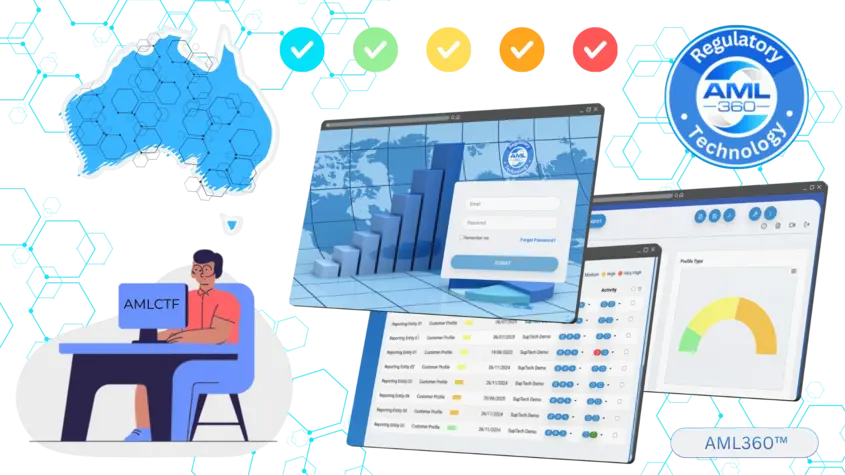
Many Australian providers now position compliance as a blend of platform capability and operational support. For example, AML360™ is described across industry sources as a compliance solution that includes Digital Compliance Officer services and a secure Cloud AML/CTF account where businesses can download required compliance reports—an approach that directly addresses two persistent pain points: governance capacity and evidence production.
Use digital services for your AML Risk Assessment Australia reporting solution
For teams transitioning from manual processes, implementation is often the hardest part: scoping, building workflows, setting decision rights, and establishing review rhythms. A Digital Compliance Officer-style service model can tighten professionalism by providing structured oversight—so the framework isn’t just purchased, but actually embedded.
Why a secure cloud account matters in real operations
Compliance work is intrinsically document- and evidence-heavy. A secure cloud environment centralises records and reporting outputs, reducing the risk that critical compliance artefacts live in inboxes, local drives, or inconsistent folder structures. It also makes it easier to produce compliance reports without time-consuming, error-prone manual compilation.
RegTech is how “good compliance” becomes “efficient compliance”
For organisations focused on AML Risk Assessment Australia, regulatory technology is no longer a nice-to-have—it’s the clearest path from labour-intensive compliance to a controlled, auditable, lower-cost framework. RegTech standardises workflows, automates repeatable checks, embeds risk logic into daily operations, and turns evidence into a natural by-product of work. And in a regulatory environment where AUSTRAC guidance emphasises effective, risk-based controls and solid record keeping, that combination is exactly what keeps businesses on track—without turning compliance into a permanent staffing problem.