
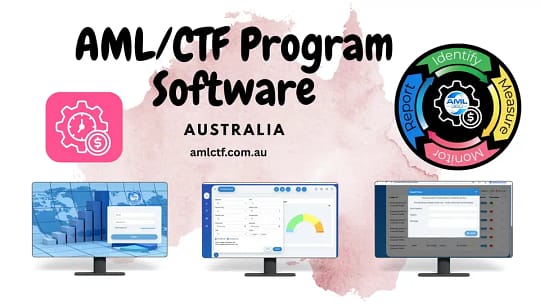
AML/CTFProgram Software
Regulatory Technology developed as AML/CTF Program Software provides consistent execution, auditable decisions, and governance that stands up under scrutiny. That’s where AML/CTF regulatory technology shines—by turning your AML/CTF Program into a living system rather than a collection of disconnected documents, spreadsheets, and inbox trails.
An AML/CTF program platform like AML360™ helps you meet compliance while reducing the cost and hassle of day-to-day operations.
AML/CTF Program Software- Unifying Policy, Procedures, and Controls
The single biggest operational win from AML/CTF RegTech is that it captures your AML/CTF framework as a unified set of policy, procedures, and controls—not as separate files scattered across SharePoint folders, PDFs, and email approvals.
A “single source of truth” for the AML/CTF Program software
When policy, procedures, and controls live together in one platform, updates propagate cleanly (no more outdated procedure documents floating around). Controls can be mapped back to the firm’s policy intent. This ensures your firm can demonstrate why a control exists – not just that it exists.
AML/CTF regulatory technology can assist AML/CF compliance officers in centralising and easily navigating AML/CTF compliance data. This reduces time at crucial periods that are wasted hunting for evidence-based reporting to present to auditors or during regulatory reviews.
-
Methodology
A clear methodology for identifying and rating ML/TF risks must be logical and demonstrated.
-
Controls
AML/CTF risk assessments must adequately inform the AML/CTF Program and align policies, procedures and controls to mitigate the risks.
-
Reporting
Traceable decisions (who approved what, when, and why). Your firm must demonstrate governance systems for ongoing monitoring and reporting.

AML/CTF Program Software- Stronger governance and clearer accountability
A Cloud centralised AML/CTF Program Software improves governance by demonstrating clear ownership of obligations and controls, establishing an audit trail of version history and approvals, and task assignment and control attestations provides a consistent audit trail of “who did what, when and why”. These governance control measures support independent audits on regulator inspections.
That auditability matters—because in AML/CTF, “we think we did it” is not a satisfying answer. The AML360™ AML/CTF Program Software lets you prove it.

Benefits of an AML/CTF Program Software
Managing an AML/CTF Program with regulatory technology is not just “digitising paperwork.” It’s about building a compliance operating system that:
(a) Captures a unified policy, procedures, and controls framework
(b) Lets AML/CTF compliance officers centralise and easily navigate AML/CTF compliance data
(c) Strengthens governance through traceability and audit-ready evidence
(d) Automates reporting, saving significant time and reducing human resourcing costs
(e) Improves consistency, reducing gaps that typically appear in fast-growing or multi-branch organisations.

Better Risk Management Through Structure, Traceability, and Consistency
AML/CTF compliance isn’t static. Products, customers, delivery channels, jurisdictions, and typologies evolve—and your controls need to evolve with them. RegTech helps by making risk management structured and repeatable.
Standardised risk assessments that connect to controls
A well-designed AML/CTF RegTech approach helps your firm (a) run risk assessments using consistent methodologies and scoring; (b)Link risk drivers to mitigating controls; (c) Track remediation activities and control uplift over time; (d) Produce management-ready outputs without rebuilding every report from scratch.
Faster answers during incidents and reviews
When risk, controls, cases, and obligations are connected, investigations and internal reviews become faster because the evidence is already organised—reducing the “data archaeology” that burns experienced staff hours.

Automation That Cuts Reporting Time—and Human Resourcing Costs
Reporting is one of the most expensive “hidden costs” in AML/CTF operations. It’s rarely a single task; it’s a chain of manual work: data collection, reconciliation, review, approvals, formatting, submission, and record-keeping.
Automated reporting reduces manual effort dramatically
With AML/CTF regulatory technology, reporting can be:
(a) Triggered by workflow events (e.g., control exceptions, threshold events, overdue actions)
(b) Generated from structured data rather than manually assembled narratives
(c) Packaged consistently for internal stakeholders (executive, board, audit committee) and for external scrutiny
The result is straightforward: automation saves significantly on human resourcing costs by reducing repetitive administrative effort and freeing compliance specialists to focus on higher-value work (risk analysis, quality assurance, training, and control uplift).
AUSTRAC Guidance: AML/CTF Program