
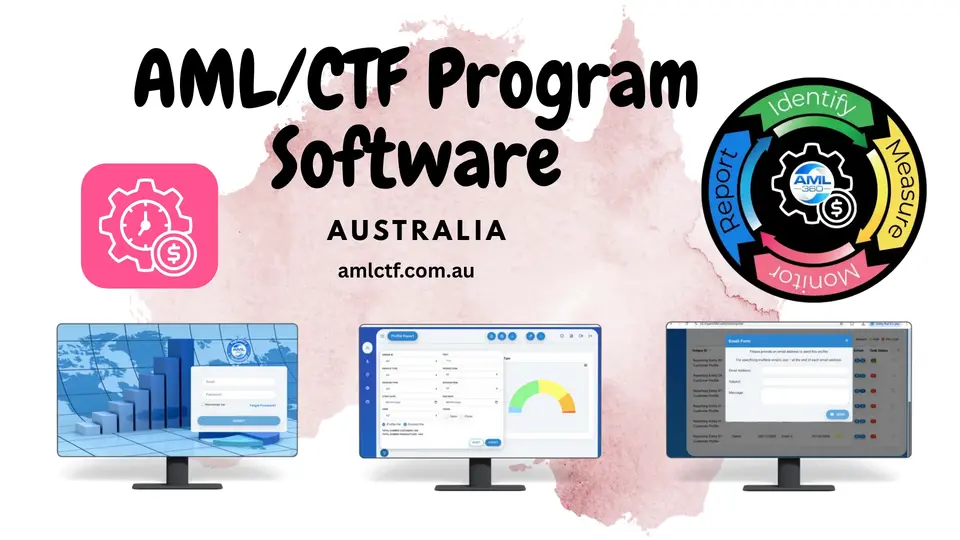
The new compliance reality: risk-based oversight needsAML Risk Software
AML RISK SOFTWARE: Regulatory technology has quietly reshaped how Australian businesses do AML/CTF compliance: away from sprawling spreadsheets and manual evidence trails, and toward systems that can maintain a living risk picture, trigger controls, and generate regulator-ready outputs on demand. That shift matters even more as AUSTRAC moves toward risk-based, outcomes-oriented oversight under Australia’s AML/CTF reforms, where the question becomes not only “did you follow a process?” but “can you demonstrate that your controls are working, proportionate to risk, and evidenced?”
AUSTRAC’s reform program is explicitly modernising a risk-based regime
Australia’s AML/CTF framework has long required reporting entities to implement controls across customer due diligence, ongoing monitoring, reporting, governance, and training. What is changing under AUSTRAC’s reform agenda is the practical emphasis on risk-based regulatory oversight and modernised program requirements that expect businesses to show how their controls operate in the real world, not just how they read on paper. Under this lens, a compliance team’s biggest vulnerability is rarely a missing policy paragraph; it’s the inability to assemble a coherent, time-stamped narrative of risk decisions and control outcomes when requested.
AUSTRAC has also published clear signals about timing and transition. Existing reporting entities face reform-related commencement and transition milestones, including impacts from 31 March 2026, with expansion to additional “tranche 2” services and entities from 1 July 2026. This is a material planning horizon: it gives businesses enough time to improve how they manage their AML/CTF Programs, but it also creates urgency to replace brittle, manual compliance methods with systems that can scale. As the regime modernises, the expectation that organisations can evidence their risk management approach quickly and consistently becomes less optional and more foundational.
This is where regulatory technology earns its keep. Risk-based oversight rewards organisations that can demonstrate a living, well-governed AML/CTF Program, where risk assessments are current, decisions are documented, exceptions are tracked, and reports can be produced without frantic reconstruction. In other words, the compliance question becomes “Can you show your work?” and RegTech is increasingly the tool that makes the answer “Yes” a routine outcome rather than a heroic effort.
AML risk software as the backbone of a living AML/CTF Program
An AML/CTF Program is not one artefact; it is a set of interconnected components that must operate daily. It includes how you assess risk, how you onboard and verify customers, how you monitor behaviour, how you escalate concerns, how you train staff, how you report, how you govern change, and how you review effectiveness. When these moving parts are handled through disconnected tools, compliance becomes an exercise in coordination and reconciliation, with a high likelihood of gaps, inconsistencies, and duplicated effort.
AML risk software changes this by becoming a single operational hub where controls are embedded into workflows. Instead of compliance being “remember to do these things,” it becomes “the system guides and records these things.” That shift reduces the operational friction that often causes compliance controls to degrade under business pressure, staff turnover, or growth. More importantly, it strengthens the evidentiary chain that risk-based oversight depends upon.
From a risk perspective, the goal is not simply to collect data, but to convert data into decisions and decisions into defensible outcomes. A properly implemented AML risk platform helps ensure that a risk rating is tied to inputs, that enhanced due diligence is triggered by defined criteria, that ongoing monitoring is configured according to risk appetite, and that escalations follow a structured pathway. Even when human judgement is required, the system can capture who decided what, when, and why. That is exactly the type of accountability and traceability that regulators expect when they assess whether controls are effective and proportionate.
The daily reality of AML/CTF compliance, and how AML Risk Software streamlines it
Governance is often described in policies but experienced in practice through approvals, oversight, and change control. In a manual environment, governance can vanish into email chains, calendar invites, and undocumented hallway decisions. Under risk-based oversight, that is a structural weakness because it becomes difficult to prove that the program was actively managed and appropriately escalated.
RegTech tools support governance by providing structured pathways for review and approval, along with version control and audit trails. When policies, risk settings, procedures, or monitoring rules change, software can preserve the “before and after,” document the rationale, and show who authorised the change. This does not remove human responsibility; it strengthens it by making accountability visible and retrievable. The result is a program that can demonstrate continuity and intent, rather than a program that looks tidy only once a year.
Risk assessments that stay current instead of becoming shelfware
The risk assessment should guide everything else: due diligence intensity, monitoring thresholds, review cycles, escalation criteria, and reporting focus. Yet many organisations treat risk assessments as periodic documents that quickly become outdated, especially when products, channels, customer profiles, or geographic exposures shift.
AML risk software helps convert the risk assessment into a living configuration. When risk factors are updated, those settings can flow through to customer risk ratings and to operational controls. That improves alignment between the program’s stated risk posture and the program’s actual behaviour. It also reduces the risk of “policy drift,” where the written program says one thing but daily practices slowly evolve into something else. Under AUSTRAC’s evolving expectations, that alignment is not a nice-to-have; it is an essential element of defensible compliance.
Customer due diligence as a lifecycle, not a one-time checklist
CDD and ODD are daily work. They include identity verification, beneficial ownership capture, understanding purpose and nature of the relationship, identifying politically exposed persons where relevant, and applying enhanced due diligence when risk warrants it. They also include periodic reviews and event-driven refreshes when circumstances change.
RegTech streamlines this by standardising what “complete” looks like, prompting required steps, and recording evidence in a consistent structure. When a higher-risk customer triggers enhanced due diligence, the workflow can require additional information, capture approvals, and log decision points. The main advantage here is not speed alone; it is consistency. If your organisation has to justify why two similar customers were treated differently, a systemised process reduces the likelihood that the answer is “because one file was handled by a more experienced staff member.” Instead, the program’s logic and governance are embedded in how work is executed.
Ongoing monitoring and escalation that produces defensible outcomes
Ongoing monitoring is where compliance is most exposed to operational strain because it is continuous, noisy, and often dependent on judgement. Alerts can be generated in high volumes, and the quality of triage decisions can vary widely without structure.
AML risk software can assist by supporting monitoring rules, assigning cases, tracking status, and capturing outcomes. If an alert is dismissed, the system can capture the reason and supporting notes. If a matter is escalated, the steps taken can be recorded as part of the case history. This is crucial for risk-based oversight because regulators do not only look for the existence of monitoring; they look for evidence that monitoring is meaningful, that decisions are reasoned, and that escalations follow a controlled process.
When software is properly configured, the organisation’s monitoring environment becomes less dependent on individual memory and more dependent on consistent workflow. That reduces the chance of missed handovers, undocumented rationales, and uneven treatment of comparable cases. It also strengthens the organisation’s ability to identify patterns and improve controls, because decisions and outcomes are captured in a structured way rather than buried in free-text narratives.
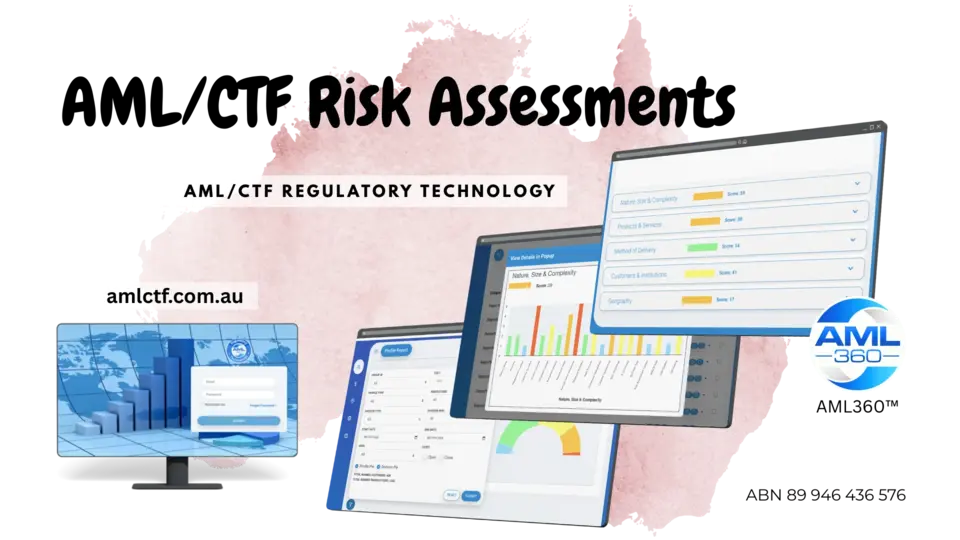
AML360™ and the “Digital Compliance Officer” operating AML Risk Software
Within this RegTech trend, AML360™ is positioned as a digital compliance solution that centralises AML/CTF activities and supports structured compliance outputs. Its framing as a “Digital Compliance Officer” reflects a broader market reality: many businesses want a system that acts like an always-available compliance function, guiding the team through required steps and producing organised evidence without constant manual intervention.
For Australian organisations, the “Digital Compliance Officer” idea resonates because AML/CTF obligations are persistent and multi-threaded. A compliance manager may be balancing program governance, risk reviews, staff training, monitoring escalations, and audit preparation simultaneously. The more those obligations can be managed in one place, with workflows that reinforce consistency and records that are generated through normal operation, the less time the team spends on administrative glue work.
References to Digital Compliance Officers relying on AML360™ as their preferred choice speak to this preference for a centralised, structured environment. In practice, this means configuring modules, recording decisions as they occur, and being able to extract reporting and compliance artefacts without rebuilding the story from scratch. When reforms amplify expectations around risk-based outcomes and evidence, that operating model becomes even more valuable because it supports day-to-day discipline and long-term defensibility at the same time.
Eliminating complexity without dumbing down compliance
There is a common misunderstanding that “streamlining” means reducing rigour. In AML/CTF, the opposite is often true. Manual processes create complexity by forcing staff to juggle inconsistent templates, unclear ownership, scattered evidence, and untracked decisions. That complexity increases the risk of errors and makes it harder to prove control effectiveness.
RegTech streamlines by removing unnecessary variation and by making the right actions easier to perform consistently. It can reduce duplicated data entry, standardise case management, and create a reliable audit trail. This is not about replacing judgement; it is about ensuring judgement is applied in a governed and visible way. In risk-based oversight, the ability to show your program’s logic and demonstrate consistency over time is the currency of credibility.
There is also a practical benefit that business leaders notice quickly: fewer compliance fire drills. When the program is systemised and evidence is generated as work happens, audits and reviews become less about chasing artefacts and more about improving controls. Compliance teams can spend more time analysing risk and less time formatting documents. That change is not glamorous, but it is transformative.
Preparing for AUSTRAC’s reforms: why “operational readiness” beats “document readiness”
As Australia moves through AML/CTF reform timelines, many organisations will be tempted to focus on rewriting program documents and updating policy language. Document updates will be necessary, but they are not sufficient. Under risk-based oversight, the more difficult task is ensuring that the program’s daily operation can consistently produce the outcomes and evidence the regulator expects.
Operational readiness means that governance is active, that risk settings are current, that due diligence processes are applied consistently, that monitoring is meaningful, that escalations are controlled, and that reporting is reliable. It also means that the organisation can show a coherent trail connecting risk identification to control selection to control performance. AML risk software supports that chain by linking activities and preserving context, which is difficult to achieve when the program is distributed across disconnected tools and personal knowledge.
AUSTRAC’s published reform information underscores that these changes are not hypothetical and not distant. Businesses that adopt RegTech as an operating backbone are better positioned to handle both the procedural and evidentiary demands of a modernised regime, including transition milestones affecting existing reporting entities and the broader expansion of coverage from 2026.
The practical takeaway: AML Risk Software turns compliance into a system, not a scramble
For Australian businesses facing evolving AUSTRAC expectations, AML risk software is increasingly the difference between compliance that is performed and compliance that is provable. RegTech helps streamline the daily components of an AML/CTF Program by embedding workflows, reducing manual complexity, and generating audit-ready artefacts through normal operation rather than after-the-fact reconstruction. In that environment, a “Digital Compliance Officer” model, including the reliance on platforms like AML360™, reflects a broader reality: compliance is no longer a static set of documents; it is a continuous, risk-based practice that must be demonstrable at any moment, with regulator-ready reporting available at the fingertips, upon a keyboard.
Reporting readiness and “regulatory-ready” outputs on demand
One of the most visible benefits of RegTech is the ability to generate reports quickly. But the real value is not just report production; it is report credibility. If a report is built by copy-pasting from multiple sources shortly before a deadline, it is fragile. If a report is generated from a system that has recorded actions and decisions continuously, it is resilient.
Platforms designed for AML/CTF compliance often focus on providing outputs “at the fingertips,” meaning that staff can retrieve evidence, summaries, and program artefacts without reconstructing them. This capability matters when responding to internal audits, external reviews, board reporting cycles, or regulatory requests. It also matters during staff turnover, when organisational memory can walk out the door. The keyboard-accessible “single source of truth” becomes a risk control in itself, because it reduces reliance on personal knowledge and improves continuity.