
What Should anAML/CTF Risk Assessment Tranche 2 Analyse and Report?
Australia’s AML/CTF Risk Assessment Tranche 2 reforms should be treated by captured businesses as a change-management project as much as it is a compliance project. The organisations that do best operate with a proven risk-based reporting framework which is the first step in the AML/CTF Tranche 2 journey.
AML/CTF Risk Assessments Tranche 2 Entities
What does a firm-wide risk assessment mean for Tranche 2 entities?
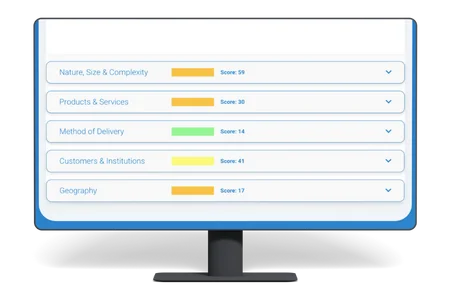
A firm‑wide risk assessment is a structured assessment of your firm’s exposure to unwittingly facilitating ML/TF relates offences. The assessment will examine vulnerabilities of Client Types your firm serves (and who ultimately owns/controls the client). Products/Services are examined to identify unique characteristics that criminals seek to exploit. Referred to as Delivery Channels, your assessment will evaluate the methods relied on to enable clients to access products and services. When the delivery channels are non-face-to-face and across jurisdictions, these elements inherently increase risks. The types of controls to manage and mitigate known risks will be set out in the AML/CTF Program. How your firm determines ML/TF risks when dealing with Geographies requires evaluation and reporting. The firm-wide ML/TF risk assessment tranche 2 report will clearly define the types of ML/TF risk vulnerabilities applicable and incorporate consideration to the nature, size and complexity of the Tranche 2 entity.
-
Measuring
A clear methodology for identifying and rating ML/TF risks must be logical and demonstrated.
-
Reliability
The sources of guidance relied on for reporting ML/FT firm-wide risks can be tested.
-
Adaptability
The model relied on should be flexible and easily modified for ongoing updates to the changing environment.
How Does RegTech Support ML/TF Risk Assessment Tranche 2 Framework
A strong ML/TF Firm-Wide Risk Assessment (FWRA) is not a generic checklist. It is specific to your business and directly usable by staff.
AUSTRAC expects your risk assessment to reflect the actual regulated activities and how they are delivered—not an abstract corporate description.
A static FWRA becomes obsolete quickly; AUSTRAC expects it to be maintained and used.
Your methodology should explain the “engine” of your assessment so that an independent auditor and the AML/CTF supervisor could reproduce it. This means the risk-based approach must be explainable. AUSTRAC looks for disciplined, consistent decision-making supported by records.
For Tranche 2 entities, the AML/CTF firm‑wide risk assessment is not “just another compliance document.” It’s the blueprint that tells AUSTRAC—and your own staff—why your AML/CTF controls look the way they do, where the real risks sit in your operating model, and how you make consistent, risk-based decisions that hold up under scrutiny.
🔍 Why AML360™?
1) Delivering ML/TF compliance expertise
Tranche 2 businesses commonly face risk drivers that don’t show up in simple templates. Your ML/TF firm-wide risk assessment Tranche 2 model should capture the reality of what ML/TF risks look like in your business. AML360™ ensures your firm’s ML/TF typologies consider your sector inherent risks and can demonstrate you’ve considered known vulnerabilities.
3) Stronger governance, clearer accountability
Regulators care about governance as much as outputs. A platform approach typically strengthens: (a) Ownership of risks and controls, (b) Review and approval workflows, (c) Audit trails and evidence retention.
When your AML/CTF Risk Assessments are tied to structured approvals and review dates, reporting becomes more than narrative—it becomes provable.
4) Mapping a structured ML/TF risk assessment Tranche 2 report
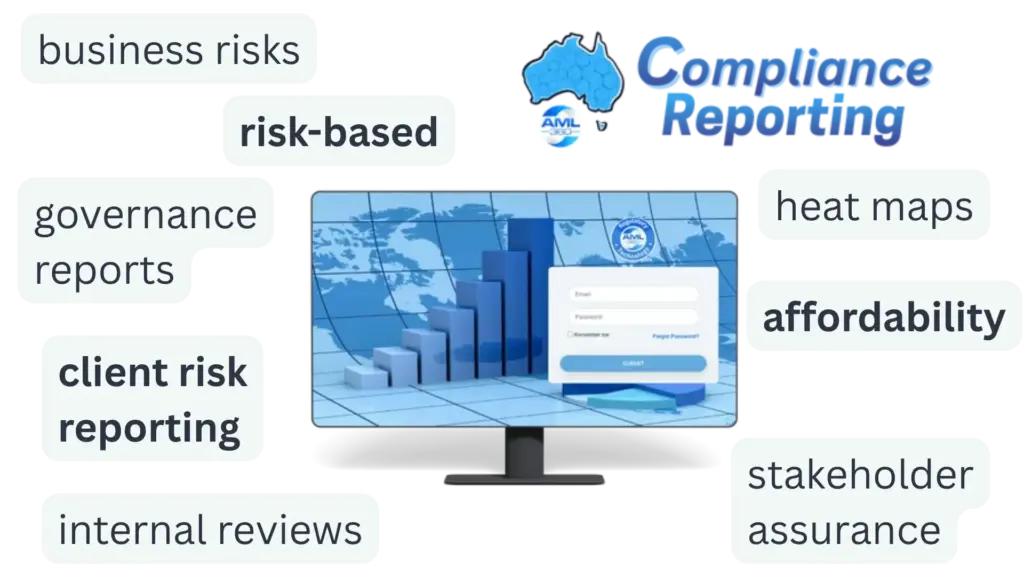
Risk-management protocols are embedded to demonstrate the adequacy of your firm-wide risk assessment. The compliance report maps your firm’s risks, the level of exposure and describes prompts and measures for consideration of the AML/CTF Program.
5) Ensuring the AML/CTF risk assessment Tranche 2 drives the AML/CTF Program
Your Tranche 2 firm-wide risk assessment should not simply end with a risk rating. It should drive practical settings for the AML/CTF Program such as:
(a) The type of onboarding data available for risk-based Know Your Customer profiling;
(b) The AML/CTF risk assessment should guide the AML/CTF Program in setting thresholds and triggers that escalate verification to enhanced due diligence and or requiring senior management approval.
(c) Known inherent risks that increase exposure to ML/TF need to be considered and reported. This includes whether complex ownership structures feature in the client base, if the firm deals with high-risk jurisdictions and the type of third-party relationships that the firm relies on.
If your firm cannot evidence the risk assessment inputs and the resulting controls, AUSTRAC will view the program as not effectively implemented.
Discover why data is power for ML/TF Firm-Wide Risk Assessments
Get confident in using ML/TF regulatory technology for ML/TF risk assessment reporting